
- All
- Product Name
- Product Keyword
- Product Model
- Product Summary
- Product Description
- Multi Field Search
Views: 7 Author: Site Editor Publish Time: 2026-08-07 Origin: Site
A solar pump system converts photovoltaic energy into pumping power, eliminating the need for grid electricity. MASTRA's SP series offers both AC and DC configurations suited to agricultural irrigation, deep well extraction, and livestock water supply—with models exported to more than 80 countries across Asia, Africa, and Latin America.
Running a water pump in a remote farm or rural community used to mean one of two things: a diesel generator or an unreliable grid connection. Both come with high operating costs and maintenance headaches. Solar-powered pumping has changed that equation significantly.
Over the past decade, the cost of photovoltaic panels has dropped by more than 90%, making solar-driven water supply genuinely cost-competitive with conventional electric pumps. MASTRA Pump, a Guangdong-based manufacturer with over 33 years in the pump industry, has built its SP series specifically around this shift. Their solar pump system lineup covers submersible screw pumps, borehole impeller pumps, and full stainless steel deep well units—each designed for high efficiency under variable sunlight conditions.
This guide breaks down how these systems work, where AC and DC configurations differ, and which setup makes the most sense depending on your application.
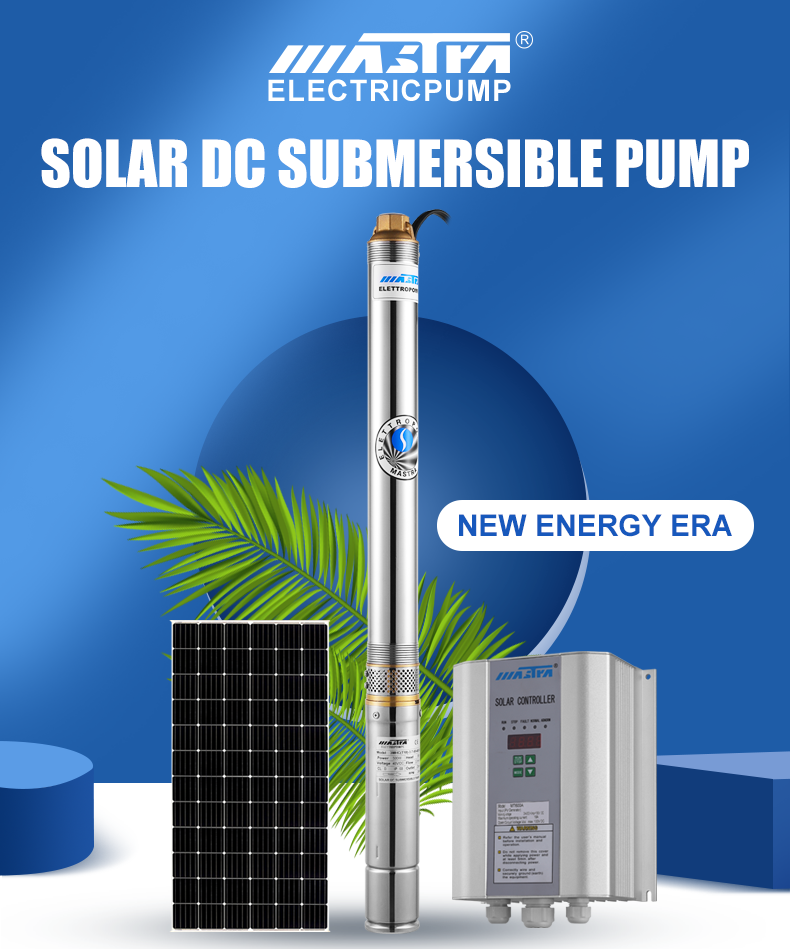

At its core, a solar pump system consists of three main components: photovoltaic panels, a motor controller (sometimes called a Variable Frequency Drive, or VFD), and the pump itself. The panels generate direct current from sunlight. The controller converts and regulates that power before it reaches the motor. The pump then pushes water from a source—a borehole, river, or reservoir—to where it's needed.
What makes solar pumping particularly practical is the natural alignment between solar availability and water demand. On hot, sunny days—exactly when crops or livestock need the most water—the panels produce the most power. This correlation reduces the need for large battery banks, lowering system cost considerably.
MASTRA's submersible pumps push water upward from below the surface, rather than pulling it from above. This method is more efficient at depth and handles higher delivery pressures. Their SP series models are rated for wide speed-regulating ranges, which means they continue operating under partial sunlight rather than cutting out when clouds pass overhead.
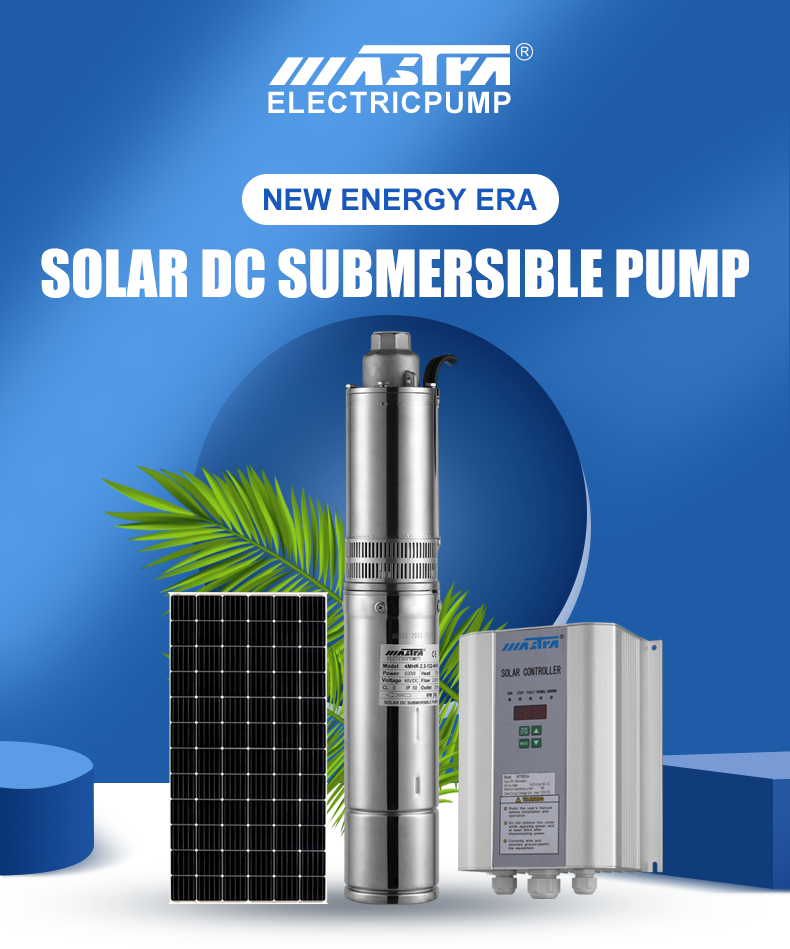

This is the most common question buyers ask—and the answer depends heavily on the application.
A solar DC pump runs directly on the direct current output from PV panels, often without a grid inverter. The motor is designed to accept variable DC voltage, making the overall system simpler and slightly more efficient in small-to-medium installations. DC systems typically cost less to set up, require fewer components, and are well-suited to remote sites where simplicity matters.
A solar AC pump, by contrast, uses an inverter to convert panel output into alternating current, matching the motor's operating requirements. AC motors are widely available, easier to service in the field, and can handle larger flow rates and higher head pressures. If a site already has some grid infrastructure—or expects future grid connection—an AC system integrates more easily.
Feature | Solar DC Pump | Solar AC Pump |
|---|---|---|
Motor type | Brushless DC or BLDC | Standard AC induction |
Inverter required | No (or built-in) | Yes |
System cost | Lower upfront | Slightly higher |
Maintenance | Simpler | Easier to source parts |
Best for | Small boreholes, remote farms | Large-scale irrigation, grid-hybrid |
Typical head range | 10–120 m | 20–200 m+ |
Efficiency at partial sunlight | High | Moderate to high |
MASTRA's solar DC pump lineup includes full stainless steel deep well models built for corrosive groundwater environments and submersible screw models suited to low-flow, high-head applications. The stainless steel construction is particularly relevant in coastal or mineral-rich groundwater areas where standard materials degrade quickly.
The right choice depends on three factors: required flow rate, total dynamic head (how high and far the water must travel), and available budget.
For small farms or household water supply pulling from depths under 80 meters, a DC system typically delivers better return on investment. The simpler electronics mean fewer failure points, and MASTRA's borehole impeller models in this range are designed to work directly with standard PV panel arrays.
For larger agricultural operations—say, irrigating 50+ acres or supplying water to multiple storage tanks simultaneously—an AC configuration handles the load more reliably. The higher torque output of AC motors under sustained demand makes a meaningful difference over a full growing season.
MASTRA's screw-type submersible models are worth noting here. Screw (or helical rotor) pumps handle sandy or slightly turbid water better than centrifugal impeller designs, which can wear quickly with abrasive particles. This matters in many developing regions where borehole water carries fine sediment.
Regardless of configuration, pairing a MASTRA pump with a correctly sized VFD controller protects the motor from voltage spikes and extends lifespan. MASTRA's SP series controllers are matched to each pump model, removing the guesswork from system assembly.
The MASTRA SP series has been deployed across more than 80 countries, serving applications that include:
Agricultural irrigation: Drip and sprinkler systems for smallholder and commercial farms
Livestock water supply: Remote troughs and storage tanks for cattle, sheep, and poultry operations
Village water supply: Community boreholes in areas without reliable grid access
Aquaculture: Pond circulation and oxygenation in fish farming operations
Construction sites: Temporary water supply during building projects in remote areas
Each application places different demands on pressure, flow, and runtime. MASTRA's engineering team assists buyers in selecting the correct pump model, panel size, and controller specification for their specific site conditions.
With over 33 years of manufacturing experience, 100+ honors and certificates, and a monthly output exceeding 80,000 units, MASTRA brings industrial-scale quality to every unit in its solar lineup. Their solar AC pump and DC configurations are available as complete pump sets, including panels, controller, and installation hardware—reducing procurement complexity for distributors and project developers alike.
Choosing between AC and DC solar pumping comes down to matching system design to site reality. DC systems win on simplicity and cost for smaller depths; AC systems win on scalability and serviceability for demanding applications.
MASTRA's SP series covers both ends of that spectrum with proven submersible technology, full stainless steel options for aggressive water chemistry, and export-ready documentation for international projects. With over three decades in the pump industry and presence across 80+ markets, MASTRA delivers the reliability that off-grid water projects cannot afford to compromise on.
Contact MASTRA's technical team to get a customized system recommendation based on your site depth, daily water demand, and panel availability.
Panel count depends on the pump's wattage and your daily peak sun hours. A 400W DC borehole pump typically requires 2–4 standard 200W panels. MASTRA provides panel sizing guidance with each pump model to ensure the system matches local solar irradiance data.
Yes. MASTRA's SP series pumps are designed with wide speed-regulating ranges, allowing them to operate at reduced output during overcast conditions rather than shutting off entirely. On low-irradiance days, flow rate decreases but pumping continues.
With proper maintenance, MASTRA submersible pumps are designed for extended operational life. PV panels typically carry 25-year output warranties from manufacturers. The controller (VFD) is usually the component most likely to require replacement, typically after 8–15 years.
For most permanent installations, yes. Diesel pumps carry ongoing fuel costs and require regular engine maintenance. A solar pump system has near-zero operating costs after installation. The break-even period versus diesel is typically 2–4 years, depending on fuel prices and daily pump runtime.
Yes. MASTRA supplies complete pump sets including the submersible pump, motor controller, and connection hardware. Distributors in more than 80 countries source directly from MASTRA's Guangdong factory, with full export documentation and multilingual technical support available.